
The Marsh the Rich Guys Tried to Own

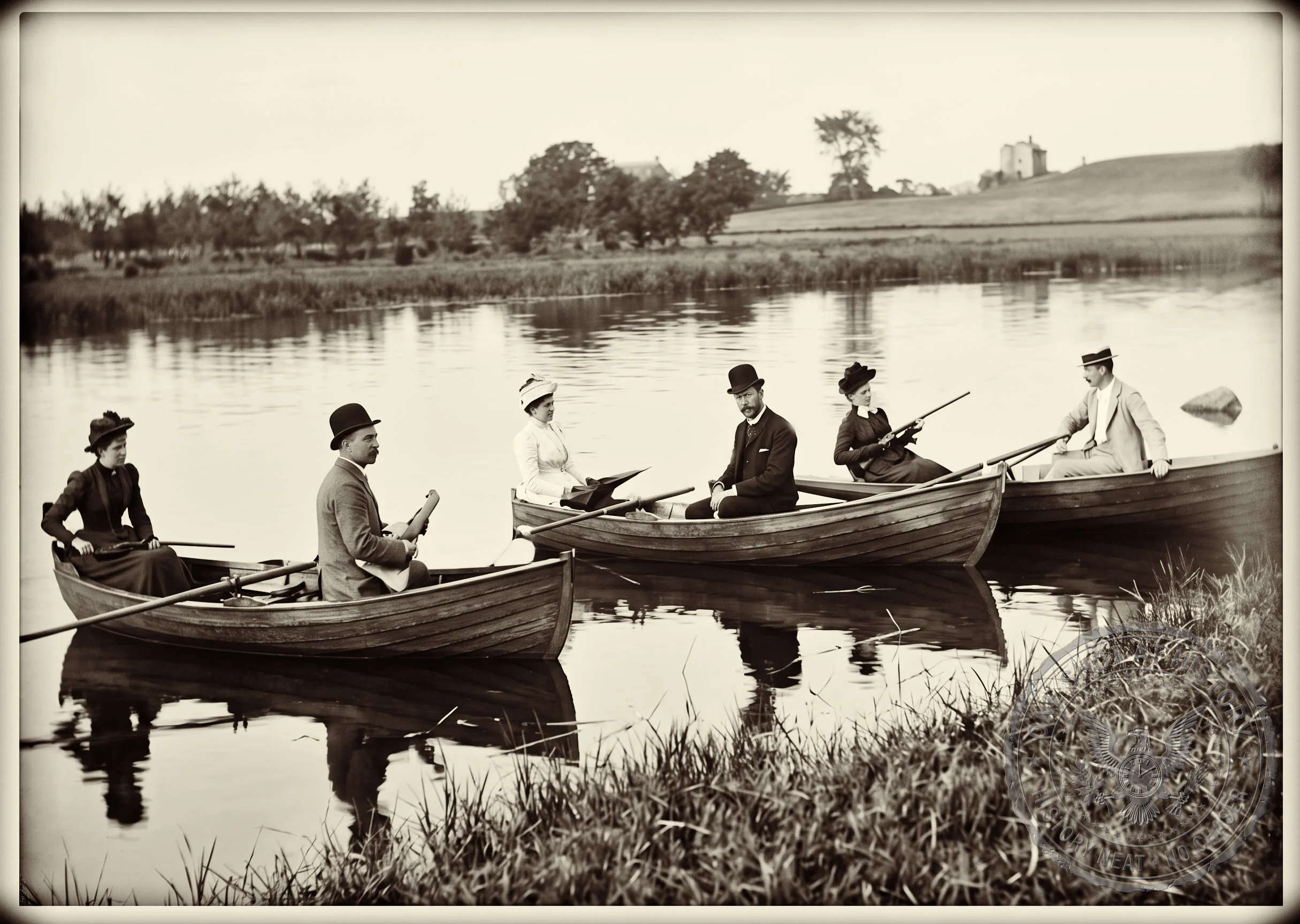
Before it was a national wildlife refuge with a visitor center and a gift shop, Horicon Marsh was 32,000 acres of the best duck hunting in the Midwest — and for about forty years, a handful of very rich men did everything short of putting up a castle wall to keep it to themselves.
Horicon wasn’t unusual in this. By 1892, Wisconsin counted something like thirty-five hunting clubs across the state, evidence of a swing already underway — from the free-for-all commercial market hunting of the mid-1800s toward organized clubs that looked, at least on paper, more like conservation than the wholesale slaughter that had come before. Horicon just did it on a bigger, richer scale than most.

It started innocently enough. In 1883, a local sportsmen’s club tallied the marsh’s output — something like 500,000 ducks a year, plus 30,000 muskrat and mink pelts — and word got out the way it always does. By the turn of the century, five hunting clubs had planted flags on the place: the Kaw Kaw Club, the Fond du Lac Shooting Club, the Horicon Shooting Club (aka Strook’s Club), the Greenhead Hunting Club, and — the main character of this story — the Diana Shooting Club.
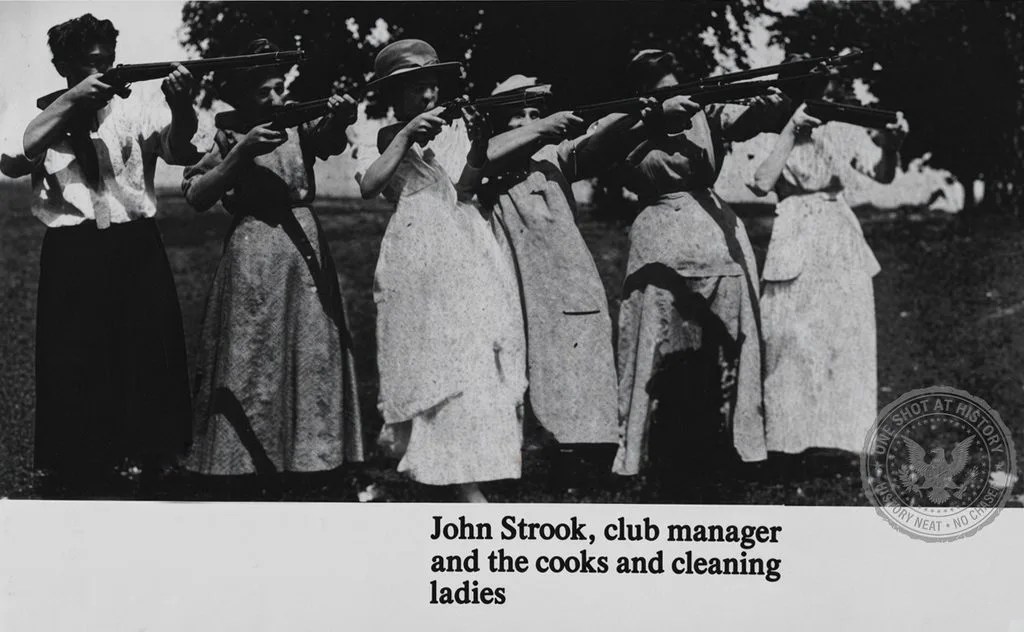
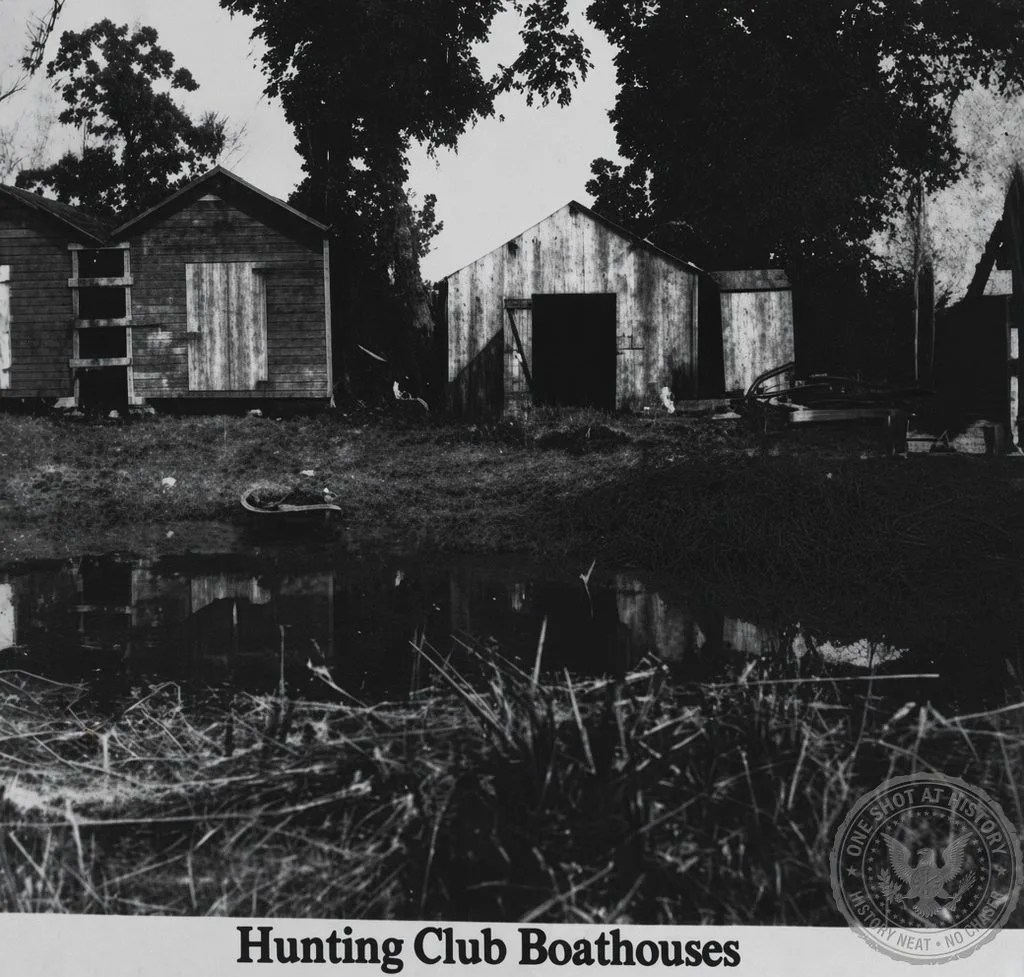
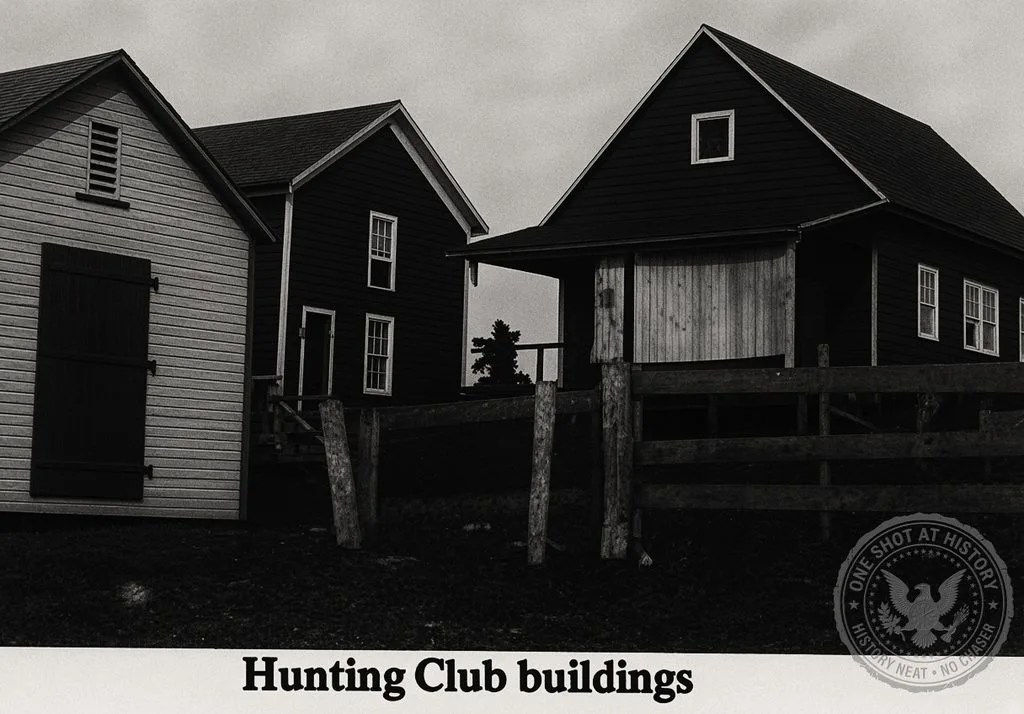
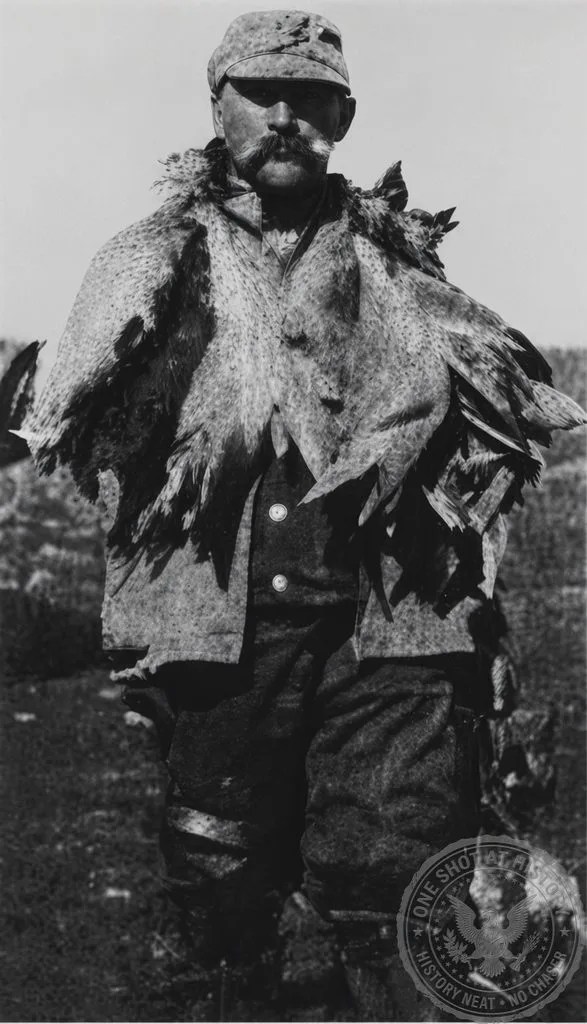

Above, the Horicon Hunting Club, aka, The Strooks Club, so nicknamed because it was on Ferdinand Strook’s Farm and he, and his wife and family helped guide, feed cook, and clean.
The oldest and most storied of the five was the Kaw-Kaw Shooting Club — sometimes spelled Caw-Caw — founded all the way back in 1866 on a small island in the marsh’s northwest corner, near what’s now Misling Island Road. Ten Milwaukee men bought the island, evicted (shot and killed) the black-crowned night herons nesting in its trees (their harsh “qua-qua” call gave the island, and the club, its name), cleared the brush, and put up a clubhouse — guided to the spot, club lore has it, by Harry Clark, son of the marsh’s first settler Satterlee Clark, and by a map a friend had “sketched on a blank leaf resting on a bale of buffalo robes.” Their first season on the marsh they shot something like 3,000 ducks and geese, plus sandhill cranes, snipe, golden plover, quail, and ruffed grouse — a haul that says everything about how thick with game Horicon still was. The club’s run at Horicon didn’t last, though: when the Horicon dam came out in 1868, water levels dropped too low for easy travel to the clubhouse, and members were losing their taste for puddle ducks in favor of diving ducks anyway. Sometime between 1869 and 1872 they pulled up stakes for the deeper water of Lake Puckaway in Marquette County, where the club kept hunting for nearly seventy more years, until 1940.
Not all five clubs held the marsh the same way. From 1883 to 1920, two of them — Diana and the Horicon Shooting Club — held actual leases on Horicon Marsh itself, carved out of land owned by the Mechanics Union Manufacturing Company. Diana leased 4,000 acres on the marsh’s south end; the Horicon Shooting Club took 9,000 acres on the north end, its roster drawn mostly from hunters around eastern Wisconsin. Both clubs signed on in 1883 at the going rate of $100 a year, locked in for 25 years, and both used the leases to shut everyone else out — no hunting on the leased water, no setting foot in the clubhouses, no exceptions, without a member’s permission. The rest of the marsh stayed open to the market hunters who’d been working it for decades. Locals who’d hunted Horicon freely for generations were, understandably, furious about the part that wasn’t.


Diana was not messing around. Founded in 1883 on the Miescke farm on the marsh’s west side, it drew its membership from the moneyed set of Milwaukee, Chicago, and Madison — including Willard Van Brunt, of the farm-equipment fortune that later became part of John Deere. The club leased several thousand acres, put private wardens out on patrol, and arranged for its own railroad stop at Swan Road, so members could roll in by private train and step directly from the parlor car into a duck blind. It was, by any measure, hunting as a lifestyle brand.

Down the shore and considerably less fancy sat the Greenhead Hunting Club, founded in 1902, then incorporated on July 29, 1903, by locals who paddled downstream from the Rock River to hunt the marsh, and who — radically, for the era — assumed the water belonged to everybody. This clubhouse sat on land originally owned by Albert and Blonda Nietschke, who then sold it to Louis Ziegler for $100. Then later transferred to the club. (Note: Greenhead Club has grown; in 2023 the Club acquired another 100 acres in the town of Clyman off of WI 60 near the 26 bypass, from Junction Road Farms LLC. )


That assumption got tested in the fall of 1913, when Greenhead officer and attorney Paul Husting paddled his canoe straight into water Diana considered private. Diana’s wardens arrested him for trespassing, which turned out to be a mistake, because Husting was exactly the wrong guy to try that on. He took it to court, and the case — Diana Shooting Club v. Husting — climbed all the way to the Wisconsin Supreme Court. In 1915, the justices ruled against Diana in resounding terms: Wisconsin’s navigable waters were public, full stop, “free to all for commerce, for travel, for recreation, and also for hunting, and fishing.” It remains a foundational public-trust water rights case in the state today.
The ruling gutted the whole premise of an exclusive marsh, and the Diana Shooting Club closed up shop that same year. Husting rode the win into the U.S. Senate in 1914, the first Wisconsinite ever elected to the seat by popular vote, and kept fighting for public access to the state’s waters from Washington.
Then, two years after securing the public’s right to hunt those waters, the sport turned on him. On Sunday, October 21, 1917, Paul and his brother Gustav were duck hunting on Rush Lake in western Fond du Lac County. Around 4:30 in the afternoon, a flock of eight mallards dropped into their decoys. Paul stood to take his shot; Gustav swung his gun at the same instant and hit his brother by accident. Paul was carried to the nearest house on the lake, the Blackburns’, where he was tended until doctors could reach him. Family rushed to his side — brothers Gustav, Berthold, and Bonduel among them, though his sister Bella and brothers Otto, Max, and Leo couldn’t get there in time. At 10:45 that night, Paul Husting died of his wounds. His last words were, “Tell them I did the best I knew.”
Three thousand people came to his funeral in Mayville. President Woodrow Wilson wrote to the family: “Your son’s death has come to me as a great personal grief. He was one of the most conscientious public servants I have ever known… I grieve with you with all my heart.” The man who’d just spent the courts’ patience proving that a duck marsh belonged to everyone was killed doing the very thing he’d fought for the right to do — undone by one shot, on a lake very much like the one he’d made public.
It didn’t much matter to the marsh’s fate anyway — decades of unregulated market hunting had already crashed the duck population, and a failed 1910–14 scheme to drain the marsh for farmland left the land looking, to most eyes, worthless. A 1933 wildfire piled on more damage before conservationists finally turned things around: the Wisconsin Legislature passed the Horicon Marsh Wildlife Refuge Bill in 1927, and by the 1940s the U.S. Fish and Wildlife Service was buying up the northern marsh outright. Today it’s split between the 21,400-acre Horicon National Wildlife Refuge and a state wildlife area run by the Wisconsin DNR — public land, exactly as the courts and Husting said it should be.

And the old clubs? Gone, all but one. The Greenhead Hunting Club — the scrappy, public-minded outfit that started this whole legal mess — outlasted the drainage attempts, the Depression, drought, and Prohibition, and is still hunting the marsh today. Sometimes the little guy actually wins.
Addendum
Horicon Marsh Shooting Clubs — Membership Rosters
Five private hunting clubs controlled the best duck-hunting water on Horicon Marsh between 1883 and 1915: the Kaw-Kaw Club, the Greenhead Club, the Fond du Lac Shooting Club, the Horicon Shooting Club (aka Strook’s Club), and the Diana Shooting Club. Rosters below are reconstructed from surviving club records, Fond du Lac and Dodge County court records, newspaper notices, and period photographs — where no documentation has yet surfaced, the field is marked N.R. (Needs Research) rather than guessed at.
Leased roughly 5,000 acres of the marsh’s southern portion. Members were drawn chiefly from Milwaukee, Chicago, and Madison, arriving by the club’s own railway stop at Swan Road. Closed following the 1915 Wisconsin Supreme Court ruling in Diana Shooting Club v. Husting.
| Name | Location | Role |
|---|---|---|
| W. A. Van Brunt | Horicon | OfficerPresident |
| A. K. Delaney | Mayville | OfficerVice President |
| S. E. Davis | Horicon | OfficerTreasurer |
| C. A. Hart | Horicon | OfficerSecretary |
| H. Boehmer | Mayville | Member |
| S. Clement | Milwaukee | Member |
| W. Clement | Milwaukee | Member |
| C. E. Cole | Chicago | Member |
| F. T. Day | Milwaukee | Member |
| C. Fernekes | Milwaukee | Member |
| A. H. Gardner | Milwaukee | Member |
| H. Gardner | Milwaukee | Member |
| C. C. Germain | Chicago | Member |
| J. B. Hays | Horicon | Member |
| E. A. Kretschmer | Horicon | Member |
| B. Leidersdorf | Milwaukee | Member |
| G. H. Lawrence | Burnett | Member |
| H. Mieske | Burnett | Member |
| G. B. Miner | Milwaukee | Member |
| L. J. Petit | Milwaukee | Member |
| J. O. Pierson | Chicago | Member |
| G. Preuser | Milwaukee | Member |
| P. F. Stone | Chicago | Member |
| T. C. Schove | Manitowoc | Member |
| Dr. N. Rowe | Chicago | Honorary |
Originally chartered in 1883 to promote “the cultivation and practice of… sharp-shooting” alongside “gallantry, social temperance and morality,” with an early lease of roughly 9,000 acres including an 80-acre waterfowl refuge at “Weber’s Pond.” A separate, undated newspaper feature describes what reads as a later reorganization: 13,000 acres owned by the Horicon Improvement Co., leased for twenty-five years, membership capped at one hundred fully-subscribed shares (the fee risen from $10 to $25, and expected in time to reach $100), and a clubhouse built on what period sources call “Strook’s Island.” Guests could be invited by any member — visitors from outside Fond du Lac and Dodge counties paid 50¢ a day, those living in the two counties $1 a day, apparently to cap the number of local shooters. Locally, the club was also known simply as “Strook’s Club,” after that island clubhouse and its cook and guide — confirmed the same organization, not a separate sixth club (see the Strook’s Club section below). See the flags below on how the two founding accounts, and the club’s manager, relate to one another.
The original club’s last known officers, reported in 1911 just ahead of the sale and disbandment described above:
| Name | Location | Role |
|---|---|---|
| Theodore Thomas | Milwaukee | OfficerPresident; Board of Directors |
| Ed. Kramer | Fond du Lac | OfficerVice President; Board of Directors |
| Carl H. Bruegger | Fond du Lac | OfficerSecretary & Treasurer; Board of Directors |
| Henry Miller | — | OfficerBoard of Directors |
| W. G. Menzel | — | OfficerBoard of Directors |
| R. Langenbach | — | OfficerBoard of Directors |
Source: “Drainage for Horicon Marsh,” period newspaper, 1911 (exact publication not yet identified). Note this slate shares no names with either officer table below, consistent with it belonging to the club’s earlier, pre-1911 incarnation.
Lillie (Strook) Laing, Ferdinand’s daughter, grew up on the farm beside the clubhouse and gave the fullest surviving account of daily life there in that same 1978 interview. The earliest members arrived on horseback — the first to reach the barn stabled their horses there, the rest tied up outside — until cars took over and a garage went up in the barn’s place. There was no electricity: candles lit the bedrooms and kerosene lamps the hall, and some of the bunk beds needed a ladder to reach. Lillie put club membership at about sixty. At night the men played cards and drew names for the next morning’s hunting grounds, then rose at four; when they came back off the marsh they sat around cleaning their guns. “They shot a lot of ducks,” she recalled, “which was mostly what was there in those days — not many geese as there are now.”
Her mother and aunt cooked the members’ meals and cleaned the clubhouse. Her grandparents, William Sr. and Augusta Strook, were the family homestead’s original owners; her grandfather did plowing work for Native American families still living near the marsh, whose children her father remembered playing with as a boy, and whom her grandmother and mother supplied with eggs and milk.
| Name | Location | Role |
|---|---|---|
| T. S. Weeks | Fond du Lac | OfficerPresident; Board of Directors |
| S. B. Amory | Fond du Lac | OfficerVice President; Board of Directors |
| C. S. Matteson | — | OfficerSecretary; Board of Directors |
| W. S. Russell | Oakfield | OfficerTreasurer & Founding Organizer; Board of Directors |
| C. M. Ray | Strook’s Island | OfficerManager; Board of Directors — see note below |
| C. K. Pier | — | OfficerSolicitor; Board of Directors |
| Ferdinand Strook | Strook’s Island | GuideCook & Guide — see note below |
| Carl Brugger | Fond du Lac | Member |
| Sam Longdin | Fond du Lac | Member |
| F. A. Nolen | Fond du Lac (police chief) | Member |
| Tom Watson | Fond du Lac (postmaster) | Member |
| Dr. L. D. Cyr | Negaunee, Mich. | Member — “iron country” |
| H. D. Fisher | Florence, Wis. | Member — “iron country” |
| A. W. Myer | Ishpeming, Mich. | Member — “iron country” |
| Murry & Mather | Marquette, Mich. | Member — “iron country” |
| J. D. Smith & James Loughrey | Marinette, Wis. | Member — “iron country” |
| S. W. Watkins | Champion, Mich. | Member — “iron country” |
| Bill Collien | Kekoskee | Guide |
| Art Collien | Kekoskee | Guide |
| Wetmore | Marquette, Mich. | Guest |
| Stone | Watertown | Guest |
| Hunt | Fond du Lac | Guest |
Officers rotated from year to year. A separate, undated newspaper notice records a different elected slate:
| Name | Location | Role |
|---|---|---|
| G. J. Clarke | — | OfficerPresident |
| B. Buchholz | — | OfficerVice President |
| Dr. J. W. Burnell | — | OfficerTreasurer |
| Robt. Eutler | — | OfficerSecretary |
| C. S. Matteson | Fond du Lac | OfficerSolicitor |
| W. S. Russell | Oakfield | OfficerManager |
Source: “The newly elected officers of the Horicon Shooting Club are…” — Fond du Lac Reporter, as reprinted in a Waupun-area paper alongside the Waupun Sportsmen’s Club correspondence below. This notice states “the officers also compose the directory,” i.e. no separate board in this account.
A trespass dispute of its own: the Waupun Sportsmen’s Club
The Horicon Shooting Club wasn’t the only outfit that ran into a fight over who owned the marsh. A published letter from J. E. Brinkerhoff, secretary of the Waupun Sportsmen’s Club — by his account, an organization of nearly fifteen years’ standing that had hunted Horicon Marsh’s west side undisturbed for most of that time — lays out their side of a trespass dispute with the Horicon club. About three years before the letter, Horicon Shooting Club representatives told the Waupun club they had leased the marsh’s entire upper end and offered Waupun members a $10–$15 membership plus annual dues to join, the money going toward an $800 clubhouse, roads, boats, and marsh policing on the east side. Holding that Horicon Marsh’s waters were open to any shooter, the Waupun club instead offered, as a ten-member club, $50 for shooting privilege and a pro-rata share of rental and policing — but no share of the Horicon club’s own clubhouse costs, since Waupun had already sunk over $1,500 into its own camp, ditches, and boats on the marsh’s west side.
The Horicon club’s secretary, C. S. Matteson, wrote back with a narrower counter-offer: ten non-voting “certificates” good for the term of the lease, for $50 plus a share of rental and the cost of “keeping a man on duty” — terms Brinkerhoff’s letter describes as having to “go in and swallow a whole pill if at all.” The dispute reached a trespass case at Juneau, which the Waupun club avoided losing, by Brinkerhoff’s telling, more through the Horicon club’s attorney neglecting to post proper bonds than through any court ruling on the underlying right to hunt the marsh. It reads as a smaller, more local echo of the fight the Diana Shooting Club would lose so decisively to Paul Husting a few years later — the same argument over the same marsh, playing out at a different scale, with a different and murkier ending.
Sources: “Drainage for Horicon Marsh,” period newspaper, 1911 (exact publication not yet identified); “Duck Hunting — Sketch of the Organization of the Horicon Shooting Club,” a Mining News correspondent’s account (period newspaper, exact date not yet pinned down); photograph caption, “Managing the Marsh: A History of Two Horicon Marsh Shooting Clubs,” Robert G. Personius, Wisconsin Academy Review, Winter 1974/75; newspaper election notice, Fond du Lac Reporter; “Our Side of the Question,” a letter from J. E. Brinkerhoff, Secretary of the Waupun Sportsmen’s Club, reprinted from the Commonwealth (exact date not yet pinned down); and “Horicon Marsh Recalls Memories of Past to Lillie Laing,” by June Kelly, The Leader News (Waupun-area), June 21, 1978.
Officers per a period newspaper notice announcing club elections. Full membership roll, vice president, and founding date not yet documented.
| Name | Location | Role |
|---|---|---|
| J. T. Green | — | OfficerPresident |
| Vice President | — | N.R. |
| H. C. Moore | — | OfficerSecretary |
| T. S. Weeks | — | OfficerTreasurer |
| General Membership | — | N.R. |
A Milwaukee sportsmen’s club chartered in 1864 — among the oldest hunting clubs found in this research. Its clubhouse stood at Marquette, in Green Lake County, on the Fox River, a once-boomtown built by the Fox and Wisconsin River Improvement Co. that was left “dilapidated” after losing the county-seat fight to Markesan. The club owned or leased grounds running three and a half miles along the river and bay, kept thirty to forty small boats, and hunted canvasbacks chiefly on Puckaway Lake (six miles long, a mile and a half wide). Membership cost $50 a year plus $1.50 a day for a clubhouse room.
| Name | Location | Role |
|---|---|---|
| A. J. Aikens | Milwaukee | OfficerPresident; Board of Directors |
| John P. McGregor | Milwaukee | OfficerVice President; Board of Directors |
| Chauncey Simonds | Milwaukee | OfficerSecretary & Treasurer; Board of Directors |
| J. C. Spencer | Milwaukee | OfficerBoard of Directors |
| J. B. Oliver | Milwaukee | OfficerBoard of Directors |
| E. H. Abbot | Milwaukee | Member |
| H. F. Bosworth | Milwaukee | Member |
| E. H. Brodhead | Milwaukee | Member |
| J. A. Ellis | Milwaukee | Member |
| Ed. E. Flint | Milwaukee | Member |
| Fred Layton | Milwaukee | Member |
| E. P. Allis, Jr. | Milwaukee | Member |
| W. W. Allis | Milwaukee | Member |
| J. L. Ranney | Milwaukee | Member |
| H. H. Shufeldt | Milwaukee | Member |
| A. Ross Houston | Milwaukee | Member |
| James Sawyer | Milwaukee | Member |
One or two additional names at the bottom of the source clipping are damaged and only partly legible (reading approximately “Angus…h” and “zoolo… T. Birchard”); they are omitted here rather than guessed at.
| Name | Location | Role |
|---|---|---|
| C. H. Moses | — | Guest |
| Ludington Patton | — | Guest |
| Dr. H. V. Wuerdemann | — | Guest |
| J. K. Ilsley | — | Guest |
| Grant Fitch | — | Guest |
| F. L. Pierce | — | Guest |
| Gustave G. Pabst | Milwaukee | Guest |
| Charles Henning | — | Guest |
| Louis Auer | — | Guest |
| Frank J. Williams | — | Guest |
| Dr. Ladd | — | Guest |
| John Dutcher | — | Guest |
| L. J. Petit | Milwaukee | Guest |
| R. G. Richter | — | Guest |
| Robert Rom | — | Guest |
A season report placed these individuals “on the hunting grounds of the Caw-Caw club, or [having] been there this fall” — alongside several already-listed members (Aikens, Simonds, Spencer, Bosworth, and A. Ross Houston, all confirmed present that season). Because the report doesn’t distinguish members from invited guests, these additional names are tagged Guest here rather than folded into the confirmed membership above. One, L. J. Petit, also appears as a member of the Diana Shooting Club — another instance of overlapping membership among the marsh’s clubs.
Listed among the original private clubs on Horicon Marsh (Volkert, 1999), founded by locals who hunted the marsh’s public waters via the Rock River. It is the only one of these clubs still active today.
| Name | Location | Role |
|---|---|---|
| Paul Husting | Mayville | Officer1913 — title N.R. |
| C. W. (Courtney Wayland) Lamoreux | — | Officer1913 — title N.R. |
A separate, later document lists the club’s full membership as of 1970:
| Name | Address | Role |
|---|---|---|
| Ted Bachhuber | R.R. 2, Mayville, Wis. | Member |
| William Bruder | 18 N. Henninger St., Mayville, Wis. | Member |
| Dr. George Dedolph, Jr. | — (address not given) | Member |
| Hilary Elsinger | 374 Furnace St., Mayville, Wis. | Member |
| Conrad Faust | 54 N. German St., Mayville, Wis. | Member |
| George Feucht | 414 N. Walnut St., Mayville, Wis. | Member |
| Richard Garling | 206 N. Ludington, Columbus, Wis. | Member |
| Louis Garms | 311 Wisconsin Ave., North Fond du Lac, Wis. | Member |
| Norman Kohli | 5405 Erie St., Racine, Wis. | Member |
| Alphonse Liscow | 18 S. Clark St., Mayville, Wis. | Member |
| Emil Malesevich | 356 N. John St., Mayville, Wis. | Member |
| Dr. Stephen Mann | 1013 N. 17th St., Manitowoc, Wis. | Member |
| Walter Muche, Jr. | 428 N. Mary St., Mayville, Wis. | Member |
| Earl Polzan | 925 Horicon St., Mayville, Wis. | Member |
| Gerald H. Polzan | 115 Roosevelt Dr., Beaver Dam, Wis. | Member |
| Harold Polzan | 609 N. German St., Mayville, Wis. | Member |
| Mrs. Hugo Prinz | 100 S. John St., Mayville, Wis. | Member |
| Rudolph Rackow | 337 Grand Blvd., Mayville, Wis. | Member |
| Wilbur Rediske | 306 S. John St., Mayville, Wis. | Member |
| Robert Ruedebusch | 164 E. Washington St., Burlington, Wis. | Member |
| Norman Spiering | 138 N. German St., Mayville, Wis. | Member |
| Vernon Spiering | 19 N. School St., Mayville, Wis. | Member |
| Max Strasser | 222 S. Heninger St., Mayville, Wis. | Member |
| Hal Strayer | 239 N. Walnut St., Mayville, Wis. | Member |
| Gene Wurtz | 310 Grand Blvd., Mayville, Wis. | Member |
| Herbert Ziegler | 1104 N. Marshall, Milwaukee, Wis. | Member |
Source: “1970 Greenhead Hunting Club Members,” a typed club roster stamped “COPY.” Two entries (Earl and Gerald H. Polzan) carry a handwritten correction mark over the surname suggesting “Polzen” may be the intended spelling; the typed form is used here since it’s what’s legible across all three Polzan/Polzen entries. Street addresses in this list run to the right edge of the source photograph and are completed here only where the abbreviation is unambiguous (e.g. “Wis.”).