

During the Civil War, they answered the call. Most came home. All left something behind.
Part One of Five
A Town Answers the Call
How Horicon, Wisconsin, went to war in the spring of 1861

165 years ago, when President Abraham Lincoln issued his first call for 75,000 volunteers in April 1861, the citizens of Horicon, Wisconsin, did not hesitate. Within days, local men were signing enlistment papers, stepping forward to defend the Union in what many believed would be a short conflict. It would last four years and touch nearly every household in town.
Horicon in 1861 was a working community of several hundred residents — mills, craftsmen, and farmers clustered along the Rock River in Dodge County. It was not a large town by any measure. Yet from that modest population came nearly 90 documented soldiers, serving in infantry, artillery, and specialized units across both the Eastern and Western theaters of the war. For a community its size, that was an extraordinary commitment.
Drilling Before the War
The Horicon Guards had not waited for the war to begin before preparing for it. As early as May 1858, a public notice went out to the citizens of the area to form a local military company. By 1860 the Guards were drilling regularly on the east shore of Lake Horicon, on what was then the Ferdinand Steinke property across Vine Street from what is now the Blue Heron Landing. Their armory was Academy Hall, also known as the Union School, erected in 1857.
On August 17, 1860, the Guards received their muskets from Captain Barry of Milwaukee. On September 7th, the Horicon Guards appeared in full uniform and paraded the length of Lake Street, accompanied by the Horicon Band. Rumblings of secession appeared daily in the local press, and the U.S. reached a breaking point with the election of Abraham Lincoln—opposed to the expansion of slavery—this triggered the secession of Southern states, led by South Carolina in December. Southern leaders feared a Republican presidency would abolish slavery, prompting them to form the Confederacy
On February 22, 1861 — less than two months before the attack on Fort Sumter — the Guards held a Military Ball at Academy Hall. They paraded the streets in the afternoon, accompanied by Fuller’s Watertown Band, and demonstrated military exercises and the manual of arms for the assembled townspeople. In the evening, after the tenth dance, the company went through its drills. Supper was furnished at the Winter House, the establishment of Dr. Peter Winter, who would himself later serve as surgeon of the 19th Wisconsin Infantry. An Inaugural Ball followed in March 1861, at which 34 guns were fired in salute.
Opposition
Horicon native and one of the first settlers, Satterlee Clark, was a Wisconsin politician and outspoken Copperhead who vigorously opposed the Civil War and publicly praised Confederate leader Jefferson Davis, reflecting his sympathy for the Southern cause. He fit squarely within the Copperhead movement, a faction of Northern Democrats that wanted a negotiated peace with the South and argued that the war was dangerously expanding federal power. They defended states’ rights, criticized Lincoln’s suspension of habeas corpus and the draft, and often used the slogan “Constitution as it is, Union as it was,” which meant preserving the prewar Union without abolishing slavery. Clark was staunchly opposed to the Horicon Guards and was noticeably absent in the fundraising and support for the Guards.
The Call Comes
On April 16, 1861, Governor Randall called for a regiment to be composed of companies from across the state: three from Milwaukee, two from Madison, and one each from Horicon, Beloit, Kenosha, and Fond du Lac, all to report to Camp Scott by April 27th. The Horicon Guards were asked to furnish 90 men in the Governor’s first call for troops.
The response was immediate. A Union meeting was held on April 24th at Juneau, where prominent men of the community gave patriotic addresses. Professor Hawks sang “God Protect the Right.” The Horicon Cornet Band played “Hail Columbia.” A fife and drum corps played stirring martial music. The names of those who had signed up were read aloud to cheers.
The list of companies selected to compose the regiment: Governor’s Guard of Madison, Madison Guard, Park City Greys of Kenosha, Horicon Guard of Horicon, Light Guard of Milwaukee, Montgomery Guard of Milwaukee, Milwaukee Rifles, Black Yager Rifles, Union Rifles, and Beloit City Guard. Seeing the name “Horicon Guard, Horicon” on that list — alongside companies from the state’s largest cities — was a point of great pride for the town.
The Horicon Guards — First to Go
The company that answered that first call would serve as Company C of the 1st Wisconsin Infantry Regiment. Organized in April 1861 under the command of Captain Orestes B. Twogood, a Horicon resident, the company mustered into federal service on April 27, 1861, at Camp Scott in Milwaukee. They were quickly moved east to Harrisburg, Pennsylvania.

The officers of the Horicon Guards, as they first formed, were: Captain O.B. Twogood; First Lieutenant J.C. Adams; Second Lieutenant Charles H. Larrabee. The sergeants were S.W. Verbeck, J.W. Clark, H.W. Phelps, and H.A. Winter — the last being Hugh Abernathy Winter, brother of both Dr. Peter Winter and Captain Michael Winter of the steamboat M. Winter. The corporals were S.E. Tyler, George Clauson, W.W. Gilbert, and Thomas McNeil.
The privates numbered more than sixty men, a roster that reads like a map of Horicon’s households in 1861: Discher, Williams, West, Delaney, Graves, Deacon, Frederick, Dilley, Glover, Purdy, Kennedy, Cole, Hoyt, Rice, Hyde, Walker, Boss, Ward, Bower, Quick, Perry, Garvin, Knibel, Stevens, Welsh, Munn, Ihde, Mendel, Sherron, Wilson, Dowd, Burgess, Gillespie, Nightingale, Ingleheart, Dye, Rennie, Tanner, Powers, Frost, Zeiman, Kruger, Young, Gorman, Cole, Seifert, Rex, Mark, Robinson, Reichenstein, Brogess, Haight, Henze, Van Slyck, Lammond, Ihde, Allen, Chandler, Franke, Cannell, Graves, Babcock, Horny, Roll, Benson, Frownfelter, and Wilcox.
This list is drawn from the roster of May 3, 1861, reflecting the company as it was first organized. Not all names appear in the official Wisconsin Roster of Civil War Veterans — some men may have been discharged, transferred, or dropped before the formal federal muster was taken. The Wisconsin Roster remains the definitive record of those who officially served. Taken together, both lists represent Horicon’s first and fullest answer to the call.
Officers and Medical Staff
Horicon contributed not only enlisted men but also officers and medical professionals. Beyond Captain Twogood, the community sent trained physicians into the field. Dr. Charles D. Davis served as Surgeon with the 17th Wisconsin Infantry for over three years, beginning as Second Assistant Surgeon and mustering out in January 1865. Dr. J. Griffin Conley served with the 3rd Wisconsin Infantry, rising from Second Assistant Surgeon to First Assistant Surgeon, and mustered out in July 1865.
James C. Adams held the rank of First Lieutenant in Company C of the 1st Wisconsin from the regiment’s very first days, and Salmon E. Taylor served as Ensign of the same company. These men of standing in the community led their neighbors into service from the very first muster call.
Off to the Fight
The Guards first went to Camp Scott in Milwaukee. On June 9, they moved east and quartered at Hagerstown, Maryland, joining General Patterson’s Army guarding crossings of the upper Potomac River. They led the advance on Martinsburg and fought in the Battle of Falling Waters, winning what the hometown papers described as a reputation for bravery and conduct.
Being short-term volunteers, they were mustered out at Camp Scott on August 22, 1861. But the war was far from over. Just a week after the three-month muster out, orders came to reorganize the regiment for three-year service. Most of the Horicon men had already begun re-enlisting in other Wisconsin units, scattering into the regiments that would carry the fight through the long years ahead.
The Home Front Mobilizes
While the men prepared to leave, Horicon’s citizens mobilized behind them. Governor Randall issued an appeal for blankets on April 24, warning that it would be extremely difficult to furnish enough for the health and comfort of the soldiers. Relief committees were immediately organized. Boxes of food were sent to the men by the Horicon ladies. Each man received a pincushion from Miss Watterson, and havelocks (a piece of cloth to protect the soldier’s neck from the heat of the sun) of flannel from Judge Larabee’s mother.
In May, the Horicon schoolchildren made a flag for the Guards. Word came back from the men that no bunting was available in Milwaukee, so they had purchased silk to make their own — four feet by six feet — on which they had painted and gilded an eagle and thirteen stars. They called it the best flag in the regiment.
Flag raisings became great patriotic events across the county. On May 17, 1861, a flag was raised at the railroad depot, with addresses from community leaders and 34 rounds fired from a cannon, with the railroad furnishing free rides from Waupun. Over 2,000 people gathered at Clason’s Prairie southeast of Beaver Dam for the raising of a liberty pole. On June 7, a village flagpole and flag were dedicated — a flag eighteen feet by eleven feet, made by the schoolchildren, with thirty-four cannon shots fired in celebration.
A Soldiers’ Aid meeting was held in the New Church Hall in December 1861, organized by a committee of Horicon women. Such work continued through all four years of the war — as in 1864, when an exhibition was held in Academy Hall for the benefit of the Sanitary Commission, whose national leaders included Clara Barton, Louisa Alcott, and Julia Ward Howe.
The men who marched away that spring left behind a town that would spend the next four years working, worrying, and waiting. Their story — and the story of the town that sent them — continues in the installments ahead.
Part Two of Five
The Badger State Flying Artillery
More than 20 Horicon men served in the 7th Wisconsin Battery — and paid a heavy price


Of all the units that drew men from Horicon during the Civil War, none claimed a larger share of local soldiers than the 7th Battery Wisconsin Veteran Light Artillery. More than 20 Horicon men served in its ranks — the single greatest concentration of local soldiers in any one unit across the entire war. They would fight across Kentucky, Tennessee, and Mississippi, face capture, wounds, and death, and carry Horicon’s name into some of the most consequential engagements of the Western Theater.
The battery was organized at Camp Utley in Racine and mustered into federal service on October 4, 1861. Within months, it had earned a nickname that suited its character: the Badger State Flying Artillery. They were equipped with six 3-inch Ordnance Rifles, Model 1861 — lightweight, rifled muzzle-loaders effective at ranges up to 2,000 yards — supported by approximately 110 horses for mobility, though during the siege of Island No. 10 the battery was temporarily assigned to heavier 24-pound siege pieces. Standard ammunition included solid shot for penetrating fortifications and explosive shells for wide area damage.
Island No. 10 — A Union Triumph

In March 1862, the 7th Battery traveled to New Madrid, Missouri, reporting to General John Pope for siege operations against the Confederate stronghold at Island No. 10 on the Mississippi River. The 5th, 6th, and 7th Wisconsin Light Artillery Batteries were positioned on the riverbank just 800 yards from the Confederate fortress, bombarding it steadily in close-range fire.
To complete the trap, Pope’s engineers dug a canal fifty feet wide and twelve miles long — six miles of it cut through heavy timber where every tree had to be sawed off four and a half feet below the waterline — all completed in just nineteen days. The Confederate garrison, caught between the canal and the river batteries, surrendered on April 8, 1862. Pope reported capturing nearly 7,000 prisoners, 123 pieces of heavy artillery, and large stores of supplies. It was a resounding Union triumph that opened the Mississippi River all the way down to Fort Pillow, Tennessee. The Horicon men of the 7th Battery had been in the front-line batteries that helped force that surrender.


After the fall of Island No. 10, the battery remained to garrison New Madrid and the island itself until June 1862, before moving into Tennessee and the rest of their long Western Theater service.
Parker’s Cross Roads — Losses Come
The war grew harder as 1862 wore on. On December 31, 1862, the 7th Battery was directly engaged at the Battle of Parker’s Cross Roads in Henderson County, Tennessee, as Confederate General Nathan Bedford Forrest’s West Tennessee expedition neared its conclusion. The day cost Horicon dearly.
Alfred Walwork, a Horicon corporal who had risen to sergeant, was mortally wounded at Parker’s Cross Roads that day. He died of his wounds on New Year’s Day, 1863 — the first day of the year that brought the Emancipation Proclamation into effect. He was one of the first Horicon men to die in the war.
William Chisholm was taken prisoner at Parker’s Cross Roads on the same day and was later discharged for disability — the combination of captivity and its aftermath leaving him permanently broken in health. William Hilditch was also captured there, discharged for disability in April 1863.
John Wilson of Horicon had been captured even earlier, at Humboldt, Tennessee, on December 20, 1862, during the Confederate cavalry raids that preceded Parker’s Cross Roads. He survived captivity, eventually mustering out with the battery in July 1865 — one of the lucky ones.
Memphis, 1864 — The Raid on the City
The most dramatic episode of the battery’s final year came in the pre-dawn hours of August 21, 1864. Confederate Major General Nathan Bedford Forrest launched a daring raid on Memphis, Tennessee, with objectives to capture three Union generals and release Southern prisoners held in the city. The 7th Wisconsin Battery was directly involved in repulsing the attack.
In the chaos of that morning, two more Horicon men were taken prisoner. Henry Morrison and Peter Quick were both captured on August 21st. Both survived the Confederate prison system and lived to muster out with the battery in 1865 — though what those months of captivity cost them in health and years is harder to measure.
William W. Griffin of Horicon was not so fortunate. He was killed on that same day, August 21, 1864, during Forrest’s raid on Memphis.
John Ledger of Horicon had the grim distinction of being captured twice — first at Humboldt, Tennessee in December 1862, and again at Memphis in August 1864. He survived both and mustered out with the battery in July 1865.
The Full Measure
When the 7th Battery Wisconsin Veteran Light Artillery was honorably discharged on July 20, 1865, it had served for nearly four years across the length of the Western Theater. The battery lost one officer and nine soldiers to wounds, and nineteen more to disease — a toll that fell heavily on Horicon’s small share of the company.
The Horicon men of the 7th Battery — the Morrisons, the Higginses, the Frownfelters, Walwork, Chisholm, Wilson, Griffin, Ledger, Quick, Holmes, Lewis, Clarke, Munn, Todd, Beardsley, Cole — served without the fame of the great infantry engagements, but in the grinding, dangerous work of artillery across the Western rivers and roads. They earned their place in Horicon’s story.
Part Three of Five
The Long Road to Atlanta
The 1st Wisconsin Infantry carried Horicon’s men from Kentucky to Georgia — and back again


When the three-month enlistments of the original Horicon Guards expired in August 1861, most of the men re-enlisted in new units for the duration of the war. Many found their way into the reorganized 1st Wisconsin Infantry, which left Wisconsin on October 28, 1861, bound for Louisville, Kentucky. For the next three years, it would fight across Kentucky, Tennessee, and Georgia as part of the Army of the Cumberland — compiling one of the most extensive battle records of any Wisconsin regiment.
Perryville and Stones River
In 1862, the regiment fought at the Battle of Perryville in Kentucky on October 8th — suffering 55 killed, 89 wounded, and 9 captured, the heaviest single-day loss the regiment would sustain in the entire war. The ground at Perryville, known also as Chaplin Hills, was some of the hardest fighting the Army of the Cumberland would see in Kentucky.
At Stones River, Tennessee — also known as Murfreesboro — the regiment fought again from December 30 to January 3, 1863, in bitter winter conditions. The battle ground on for days in the cold, both sides suffering terribly and neither willing to yield the field. The regiment endured.
Chickamauga — The Worst Day
The regiment’s hardest moment came at the Battle of Chickamauga, Georgia, on September 19 and 20, 1863. In two days of some of the fiercest fighting of the western war, the 1st Wisconsin suffered 26 killed, 71 wounded, and 74 captured — a staggering toll of 174 casualties. Five members of the regiment who had originally enlisted in Company C in 1861 were captured together at Chickamauga and later escaped from a Confederate prison together — a remarkable story of shared fate and shared survival.
After Chickamauga came the Siege of Chattanooga and the assault on Missionary Ridge on November 25, 1863, where Union forces charged up the steep face of the ridge in one of the war’s most dramatic infantry actions.
Sherman’s March to Atlanta
In May 1864, the 1st Wisconsin joined General Sherman’s advance on Atlanta as part of the Third Brigade, First Division, Fourteenth Army Corps. They fought through the battles of Rocky Face Ridge, Resaca, Dallas, Kenesaw Mountain, Peach Tree Creek, and the Siege of Atlanta, before the final action at Jonesborough on September 1, 1864. It was a campaign of relentless movement and constant contact with the enemy, stretching across the red clay hills of north Georgia through the heat of summer.
As their term of service neared expiration, the regiment’s veterans were transferred to the 21st Wisconsin Infantry. The 1st Wisconsin was formally disbanded at Camp Washburn in Milwaukee on October 21, 1864. In all, the regiment lost 300 men — 157 killed or died of wounds, and 143 more to disease.
Captain Twogood — Horicon’s First Officer
No name is more closely associated with Horicon’s Civil War service than Captain Orestes B. Twogood. A son of William Twogood of Horicon and a banker with Horicon Bank, he organized and commanded the Horicon Guards in Company C of the 1st Wisconsin Infantry from April 18, 1861. He mustered out with his men in August of that year, then returned to service that fall as Captain of Company D of the 10th Wisconsin Infantry, commissioned on November 8, 1861. He served until May 19, 1863, when he resigned his commission.

His story did not end well. The Rock River Democrat of Rockford, Illinois, reported in December 1863 that Captain Twogood had died in Ottumwa, Iowa, on the 14th of that month. He had been visiting a sister there when smallpox claimed him. He was buried in Iowa, far from the town he had led to war. His brother-in-law, Colonel Alfred Chapin, commanded the 19th Wisconsin Infantry — the same regiment that included three brothers from the Goodenough family of Horicon.
Charles Larrabee — The Most Distinguished Man
Charles H. Larrabee of Horicon served as Ensign of Company C of the 1st Wisconsin Infantry in April 1861, but was almost immediately commissioned Major of the 5th Wisconsin Infantry on May 28, 1861 — a rapid advancement that showed how quickly talented officers were recognized in the scramble of the war’s opening months. He later rose to Colonel of the 24th Wisconsin Infantry.

Larrabee brought more to his service than military rank. Before the war, he had served as a United States Congressman and as a Wisconsin Supreme Court justice, and he continued in public life after the war ended. He is one of the most distinguished men to emerge from Horicon’s Civil War service.
The Winter Family and the Community of Service
Dr. Peter Winter of Horicon served as Surgeon of the 19th Wisconsin Infantry, resigning in March 1863. Winter was a prominent figure in the community before the war — it was at his establishment, the Winter House, that the Horicon Guards had held their celebrated Military Ball in February 1861. His name appears repeatedly in the town’s wartime social life, and his service as a regimental surgeon reflected the community’s contribution at every level of the war effort.
The Winter family gave generously to the cause. Peter’s brother Hugh Abernathy Winter served as a sergeant in Company C of the 1st Wisconsin with the original Horicon Guards. Their brother Captain Michael Winter, master of the steamboat M. Winter, did not enlist but contributed on the home front, keeping his vessel running throughout the war years to supply Horicon’s mills and ironworks with lumber and limestone.
Other Horicon men spread across more than a dozen Wisconsin regiments. Thomas G. Boss served twice — first in Company C of the 1st Wisconsin in 1861, then re-enlisting in the 16th Wisconsin in September of that year. A veteran who re-enlisted for the duration, Boss was wounded at both Corinth and Atlanta before being discharged for wounds in March 1865. Henry Dyche of the 16th Wisconsin served the full duration as a corporal, mustering out in June 1865. The three Goodenough brothers — Milo, Stillman, and William — served in the 19th Wisconsin, a testament to the sacrifices entire families made.
The records of Horicon’s officers and men across the war’s many regiments tell a story of a community that gave what it had, at every rank and in every theater, for four long years.
Next week: Part Four — The Lake, the Town, and the War at Home: The industrial world of Lake Horicon, the steamboat M. Winter, a Confederate prisoner proposal, a frontier scare, and the wild celebration when the war finally ended.
Part Four of Five
The Lake, the Town, and the War at Home
While Horicon’s men fought across the South, the town they left behind faced its own upheavals
To understand Horicon during the Civil War years, you have to first understand the lake. In 1846, a group of investors completed a log crib dam across the Rock River, raising the water level as much as nine feet and flooding the Great Winnebago Marsh. The result was what boosters of the day claimed was the largest man-made lake in the world — 51 square miles of open water stretching 14 miles north of the dam.
By the time the war came in 1861, the lake and its waterpower had made Horicon a regional hub. The mills at the dam could process 20,000 feet of lumber and 40 barrels of flour daily. Iron rolling mills, machine shops, and foundries ran along the millrace. Horicon had become a rare inland transshipment point — goods arriving by water and wagon and departing by rail, or vice versa, in a single day. The Milwaukee and Horicon Railroad connected the town to the wider national market, and lumber arrived in great rafts from the northern end of the lake to the sawmills at the dam.
The Steamboat M. Winter
The crown of this industrial era was the steamboat M. Winter. Built in the winter of 1858 and 1859, she was launched in March 1859 — 102 feet long, 22 feet wide, with a 25-horsepower engine capable of carrying 200 passengers or 100 with freight. Her feathering paddle wheels were designed for the shallow, muddy waters of the lake. She made daily runs to Kekoskee, 16 miles distant, and extended routes to Leroy and Chester.

Her captain was Michael Winter — brother of both Dr. Peter Winter and Sergeant Hugh Abernathy Winter of the Horicon Guards. Unlike his brothers, Michael did not enlist, and was later deferred from the draft. The M. Winter and her captain were deemed essential to the home front war effort — the steamboat continuing to supply grain, lumber and limestone by water to the mills and ironworks of Horicon that kept the local economy running while the men were away.
A Lake at War with Itself
But the same years that Horicon men were fighting in Tennessee and Georgia, the townspeople remaining at home were fighting each other in the courts over the fate of their lake. By the 1860s, upstream landowners whose farms had been flooded for years were taking legal action against the Horicon Dam Company. Downstream owners complained that water diversions left the river too shallow. Those with deep investments in the water — the hunters, fisherman, steamer captains, the mill owners, implement manufacturers, the iron foundries, the brewers and distillers — stood behind the dam. Their opponents were the submerged farmers who had watched their fields disappear under standing water for nearly two decades. All told, removal of the dam would carry a financial toll estimated at $250,000 — roughly five to eight million dollars in today’s terms.
Confederate Prisoners on the Lake?
In April 1862, a striking proposal was discussed at the state capital. A detachment of Confederate prisoners — soldiers captured at the fall of Island No. 10 on the Mississippi River — were to be sent to Horicon and quartered on Four Mile Island in the middle of the lake as prisoners of war. The local paper asked pointedly: “Where is the Horicon Guard? Do they take charge of the prisoners?”
The coincidence was not lost on readers. The famous Island No. 10 had fallen to Union forces on April 8, 1862 — and Horicon men of the 7th Battery Wisconsin Light Artillery had been in the front-line batteries just 800 yards from the Confederate fortress, helping force its surrender. Approximately 1,400 of the captured Confederate soldiers from Island No. 10 were in fact transported by railroad to Wisconsin and held at Camp Randall in Madison — the same training ground where the Horicon Guards had mustered a year before.
The proposal to transfer some of those prisoners to an island on Horicon Lake was never carried out, and no prisoners arrived. But the episode captures something real about how the war had come home to a small Wisconsin town: the Horicon men had been at Island No. 10 on the Mississippi, Confederate prisoners from that same battle were now in Wisconsin, and the lake north of town had a 25-acre island of its own. The connections seemed to write themselves.
The Indian Massacre Scare
The lake’s most dramatic wartime episode was not military but social. On the morning of August 26, 1861, a messenger arrived from Kekoskee with a report that 14 houses had been burned by Indians and that 800 warriors were marching on Horicon to burn and pillage the town. The Horicon Guard had not yet arrived back home from its initial service, and the town was largely without its able-bodied men.
News spread like wildfire. Women packed their valuables and carried their belongings through the streets to the train station. Men armed themselves with whatever could be found — old muskets, shotguns, rusty rifles, bludgeons, and pitchforks. Families fled by train to Milwaukee. Schools were dismissed.
An investigating committee of fifteen citizens chartered the steamboat M. Winter that same evening, hastily armed with a mounted cannon from the Horicon Guard armory, and sailed to the Native American encampment at Sweet’s Point the following morning. What they found was a small, peaceful native community — approximately 23 men, along with women and children. The chiefs expressed astonishment at the armed visitors. They told the committee: “They have no home but that small piece of land — here they wish to live in peace and be buried where lie the bones of their fathers.”
The committee declared the scare a hoax. The actual cause had been a drunken confrontation over a horse that had been shot, a rumor that grew and transformed as it traveled from farm to farm. The committee officially censured those who had sold liquor to members of the encampment, as well as white men who had visited the camp and caused offense — citing these as the true sources of grievance.
Industry Adapts

Even as the lake litigation consumed one part of Horicon’s attention, the town’s industrial life adapted and grew during the war years. In 1861, Daniel C. Van Brunt began the manufacture of broadcast seeders — the Van Brunt Seeding Machine. With so many farm laborers gone to the army, labor-saving agricultural machinery was desperately needed across Wisconsin’s farmlands. By 1863, Van Brunt had expanded to a larger property on the shores of Lake Horicon, launching what would become a major agricultural manufacturing enterprise that would define Horicon for generations. Also in 1863, Jonas Schoenmann built an elevator at Horicon, adding to the town’s role as a commercial hub for the surrounding farm country.
The Day the War Ended
When the news of Lee’s surrender reached Horicon, Principal Aaron Pickett of the school turned to his students. “Young, Sawyer, Patterson,” he said. “You may go and ring the bell for fifteen minutes. Lee has surrendered and the war is over. There will be no school today.”
People hurried in from the country, fearing at first some calamity. The women were attending a lecture in Veight’s Hall — the men cleared it for a dance. The crowd overflowed to the sidewalks. There were bonfires, fireworks, guns firing, and celebrations of every kind through the night. The town that had sent nearly 90 men to war four years earlier had survived to see them come home.
But the men who came home in 1865 returned to a Horicon already changed. In a few short years, Lake Horicon would be drained away, the dam’s legal battles finally decided against it, the mills losing their waterpower, the docks falling idle. It was a second transformation the town had to navigate alongside the harder work of welcoming back its veterans — and remembering those who did not return.
Part Five of Five
The Price Horicon Paid
Seven men did not come home. Others bore wounds for the rest of their lives. This is their story.
Horicon was a community of several hundred residents in 1861. Nearly 90 of its men went to war. Most came home. Seven did not. Others returned carrying wounds, the effects of captivity, or the quieter damage that four years of hard service left on a man’s body and mind. The full accounting of what this small Wisconsin town gave to the Union cause is, in the end, a story of individual names and individual fates.
Those names deserve to be spoken plainly and remembered.

Henry Holton — Killed April 6, 1862, Shiloh, Tennessee
Henry Holton of Horicon served as a private in the 16th Wisconsin Infantry. He was killed on April 6, 1862, the first day of the Battle of Shiloh — also known as Pittsburg Landing — one of the bloodiest days of the entire war. The 16th Wisconsin was among the first Union regiments to discover the Confederate surprise attack that morning, and suffered 40 killed, 188 wounded, and 26 missing — the fourth-highest Union regiment loss at Shiloh. Henry Holton died of a gunshot wound. He is buried at Shiloh National Cemetery, in an unmarked grave.
NOTE: In the cemetery’s Roll of Honor, this grave can be found under the miscellaneous section, number 2186. The description reads: “Amputated bones of unknown Federal soldiers.” It was originally located in Section K, grave 49 before the cemetery was reorganized and the graves renumbered.

Lewis Griffin — Died June 29, 1862, near Corinth, Mississippi
Lewis Griffin served as a private in the 16th Wisconsin Infantry. Following Shiloh, Union armies marched to the vital railroad center of Corinth, Mississippi, where disease ran rampant among the troops — typhoid and dysentery killing thousands during the siege in the summer heat. Lewis Griffin died of typhoid in the field regimental hospital on June 29, 1862, near Corinth. His burial location is listed “unknown” Most Likely in a mass grave. Lewis left behind a wife, Lilly, and 4 children. He never returned to Horicon.

Alfred Wallwork — Died January 1, 1863, Parker’s Cross Roads
Alfred Walwork enlisted in the 7th Battery Wisconsin Light Artillery and rose from corporal to sergeant. On December 31, 1862, his battery was directly engaged at the Battle of Parker’s Cross Roads in Henderson County, Tennessee, as Confederate General Nathan Bedford Forrest’s cavalry pressed hard against Union lines. Wallwork was mortally wounded that day. He died of his wounds “Vulnus Sclopeticum” – gun shot wounds on New Year’s Day, 1863 — the same day the Emancipation Proclamation took effect. He is buried on the battlefield in a mass grave, a Union Burial Site with 30 Federal soldiers in the battlefield where he fell.

Chauncey Rounds — Died August 24, 1863, Vicksburg, Mississippi
Commander Chauncey Rounds served as a musician in the 12th Wisconsin Infantry — one of the soldiers whose role was to sustain the regiment’s morale through drum and fife as much as through rifle fire. The Vicksburg campaign of 1863 was notorious for its disease casualties in the brutal Mississippi summer heat. Rounds died of disease on August 24, 1863, at Vicksburg, and is buried at Vicksburg National Cemetery. He has a marker at the Stone Cemetery in Dodge County. He was far from home.

Captain Orestes B. Twogood — Died December 14, 1863, Ottumwa, Iowa
Captain Orestes B. Twogood had organized and led the original Horicon Guards in the spring of 1861. He was the face of Horicon’s answer to Lincoln’s call, the man whose name appeared first on the company’s muster rolls and whose commission dated to November 1860. He led his men through their initial service in the Wisconsin 1st Infantry, mustered out, then re-enlisted as captain of Company D of the 10th Wisconsin Infantry. He resigned that commission in May 1863 — worn, perhaps, by two years of service.
That December, he was visiting a sister in Ottumwa, Iowa, when smallpox claimed him. He died on December 14, 1863, and was buried in Iowa. He was the captain who had led Horicon’s first soldiers to war, and he did not live to see the war end. He rests at Ottumwa, confirmed in burial records, far from the Rock River valley he called home.

William Goodenough — Died January 9, 1865, Salisbury Prison, North Carolina
Three brothers from the Goodenough family of Horicon served in the 19th Wisconsin Infantry — Milo, Stillman, and William. Milo and Stillman both received disability discharges earlier in the war. William re-enlisted as a veteran and was still in the field in the fall of 1864.
On October 27, 1864, the 19th Wisconsin was engaged at the Second Battle of Fair Oaks, Virginia, part of the grinding Siege of Petersburg and Richmond. Confederate forces took some 600 prisoners at Fair Oaks, with the 19th Wisconsin suffering particularly heavy losses charging across an open plain three-quarters of a mile wide under withering fire. William Goodenough was among the captured.
He was taken to the Confederate prison at Salisbury, North Carolina. From October 1864 until February 1865, Salisbury saw a death rate of 28 percent — bodies collected daily and hauled to mass burial trenches in a nearby cornfield. William Goodenough died there on January 9, 1865, less than four months before the war ended. He is buried at Salisbury National Cemetery, in a mass burial trench with approximately 11,700 other Union prisoners. His name is among the most sorrowful in Horicon’s Civil War record, he was 21.

William W. Griffin — Killed August 21, 1864, Memphis, Tennessee
William W. Griffin served in the 7th Battery Wisconsin Light Artillery — the same battery that had sent more than 20 Horicon men to war. On August 21, 1864, Confederate Major General Nathan Bedford Forrest launched a daring pre-dawn raid on Memphis with the aim of capturing three Union generals and freeing Confederate prisoners. The 7th Wisconsin Battery was directly involved in repulsing the attack. Griffin was killed during that engagement. He is buried at Memphis National Cemetery. He was one of the last Horicon men to fall before the war’s end.
The Wounded and the Captured
Behind the seven confirmed dead stand many more who bore the war’s costs in other ways. Henry A. Turner was wounded at Shiloh and discharged from the 16th Wisconsin in August 1862, his military service ended by the same battle that killed Henry Holton. Thomas G. Boss was wounded twice — at Corinth and again at Atlanta — before being discharged for wounds in March 1865, after two enlistments and four years of service. William Chisholm was captured at Parker’s Cross Roads and so permanently disabled by what followed that he was discharged for disability in April 1863.
John Wilson was captured at Humboldt, Tennessee in December 1862. Henry Morrison and Peter Quick were both taken prisoner during Forrest’s raid on Memphis in August 1864. All three survived their captivity and mustered out with the 7th Battery in 1865 — carrying with them what such experiences leave behind.
John Ledger endured the particular misfortune of being captured twice: at Humboldt in 1862 and again at Memphis in 1864. He too survived and mustered out, a man who had tested the odds twice and come through both times.


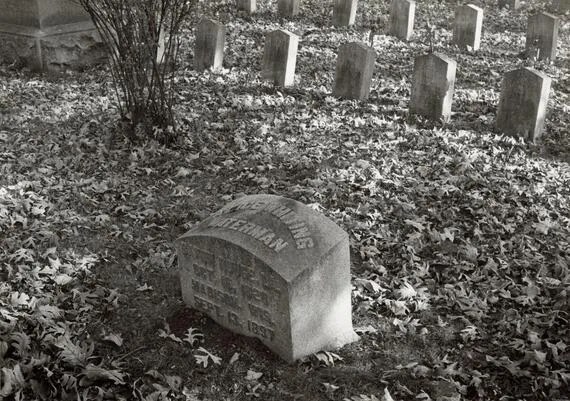
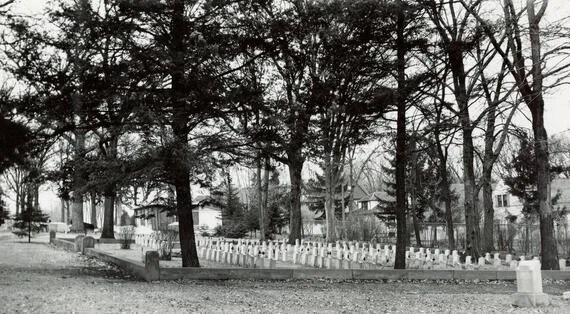
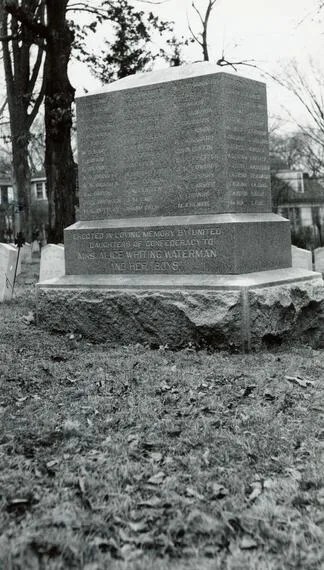
Fallen Confederate Soldiers also rest here in Wisconsin. Confederate Rest, located in Forest Hill Cemetery in Madison, Wisconsin, is the northernmost Confederate cemetery in the United States, holding the remains of 140 Confederate prisoners of war who died under Union captivity. Following the Battle of Island Number Ten in April 1862, roughly 1,400 Confederate soldiers were transferred to Camp Randall in Madison, where poor conditions led to the deaths of 140 men before survivors were relocated to Camp Douglas in Chicago. The prisoners were initially buried in a mass grave, though each was eventually given an individual tombstone. Also, buried amongst the soldiers, is the grave of Alice Waterman, a Northern Lady with a southern heart who spent more than 30 years caring for the graves of “her boys”. In January 2019, following a year-long public debate, the Madison Parks Department removed a stone cenotaph bearing the names of the 140 men and placed it in storage at the Wisconsin Veterans Museum.
For the full story on Confederates Rest, Click here.
The Veterans Come Home
Most of Horicon’s soldiers did return — mustering out as the war concluded in 1865, carrying their experiences back to the Rock River valley. They came home to a town already changing, Lake Horicon yielding back the to marsh it has arose from, the economy shifting. They took up their trades and their farms, married, raised children, grew old.
In 1885, Horicon’s veterans organized and sponsored the first formal observance of Memorial Day in the town. Schools were closed early on May 29th to permit the children to go to the woods for flowers. A procession made its way to the cemeteries, where graves were decorated, the G.A.R. ritual was read, and a volley was fired. That ceremony continued, with almost no variation, until the veterans of World War I took over from the aging hands of the Boys in Blue in the 1920s.

Among the last surviving members of the G.A.R. from Horicon — much honored and highly revered by all who knew them — were Jacob Quick, E.J. Tyler, Julius Beyer, Charles Discher, and Charles Ward, all members of the 29th Regiment, Wisconsin Volunteer Infantry. They were old men by then, the last living links to the boys who had paraded the streets of Horicon in the autumn of 1860 with their new muskets and their band.

A Veteran Killed in the Line of Duty
Not all of Horicon’s losses came on distant battlefields. William Gibson, who had served in Company H of the 1st Wisconsin Heavy Artillery — enlisting in October 1864 and mustering out in June 1865 — came home to Horicon and took up work as mason, and at the Van Brunt Agricultural Works and later served his community as city marshal.
On the night of October 20th, 1882, Gibson was called out to arrest a tramp stranger on complaints of citizens reporting drunkenness and disorder. The man resisted. Without provocation, as Horicon Marshall Gibson took him into custody, the stranger drew a revolver and fired at close range. Gibson was shot at eight o’clock that evening and died at midnight.
He was a widower, sixty years old, with three children — the youngest just ten. He had survived the war. He did not survive the peace.
The murderer stole a horse, farm-harness, and a wagon and fled. Citizens fanned out across the countryside within the hour, notifying farmers and scouring the roads. His murderer was never captured.
William Gibson’s story is a reminder that the men who came home from the Civil War returned to lives that still carried risk, still demanded courage, and still, sometimes, asked the final price.

A Veteran Murdered in “The Big Woods”
Milo A. Goodnough grew up in Horicon, Wisconsin, in a town that answered the Civil War’s call almost as soon as it came. He enlisted on May 6, 1862, as a private in Company H of the 19th Wisconsin Volunteer Infantry, one of three Goodnough brothers from Horicon to serve. The regiment marched into the brutal Western Theater campaigns of Tennessee and Mississippi, and Milo lasted just over a year before a disability discharge sent him home in June 1863.
Milo recovered, married a woman named Rosanna, and did what so many veterans of his generation did: he went looking for a fresh start on the frontier. He found it in Rock Elm Township, deep in the hardwood “Big Woods” of Pierce County in northwestern Wisconsin, where he and Rosanna homesteaded 80 acres and raised a small daughter, Flora. It should have been the quiet second act a discharged soldier had earned. Instead, a dispute over a calf with his neighbor, a Swiss immigrant named August Waldvogel, escalated into tragedy. On the night of May 9, 1868, Milo returned to Waldvogel’s cabin with a constable to settle the matter legally — and was met with a shotgun blast fired blind through the darkened window. He died two days later, at twenty-six years old, becoming the first murder victim in the history of Rock Elm Township.
What makes Milo’s death more than a forgotten frontier tragedy is who his neighbors were: Rock Elm was Ingalls country. Laura Ingalls Wilder’s grandparents farmed the section next door, and the log cabin she would immortalize in Little House in the Big Woods stood just up the road. The man who shot Milo Goodnough was tied by marriage into the Ingalls family itself, and the case cast a long enough shadow that Laura, decades later, referenced it in a private 1937 letter to her daughter, never intended for publication — calling it, in her own words, “the skeleton in the family closet.” It never appeared in her books. But the same family connections that led to that shooting would also, years later, lead Charles Ingalls toward the railroad job that carried his family to De Smet, South Dakota, and into the story the world actually got to read.
Where They Rest
The graves of Horicon’s Civil War veterans are scattered across the cemeteries of Dodge County and far beyond. The Oakhill Cemetery in Horicon holds a number of veterans. The Herrick Cemetery, near the farm on Highway 33 west of Horicon, contains additional graves. Many veterans who survived the war lived out long lives in the area and are buried in the local church and township cemeteries throughout Dodge County.
But others rest far from home. Alfred Walwork lies at Shiloh. Lewis Griffin at Corinth. Chauncey Rounds at Vicksburg. William W. Griffin at Memphis. Henry Holton at Shiloh, in an unmarked grave. William Goodenough in the mass trenches at Salisbury, North Carolina, among 11,700 men with no individual markers. Captain Orestes B. Twogood in Ottumwa, Iowa, buried among strangers. Marshall Gibson lies at rest in Oakhill Cemetery.
They went out from a small town on the Rock River and did not come back to it. Horicon remembers them still.
This concludes the five-part series Horicon in the Civil War, 1861–1865. Sources include the Wisconsin Roster of Civil War Veterans, period issues of the Horicon Gazette and Beaver Dam Argus, the Dodge County Veterans GIS Database, and Find A Grave. Readers with additional family records or corrections are encouraged to contact the Historical Horicon Facebook Page.


The Complete Roster of Horicon Civil War Veterans
The following table lists all documented Horicon residents who served in the Union Army during the Civil War, organized by regiment. Records are drawn from the Wisconsin Roster of Civil War Veterans.
The Complete Roster of Horicon Civil War Veterans
Updated 06-30-2026 Will be updated as research allows.
All documented Horicon residents who served in the Union Army during the Civil War, organized by regiment. Records are drawn from the Wisconsin Roster of Civil War Veterans, and were edited and proofed by Carl G. Reinemann for:
One Shot At History
| Name | Rank | Regiment | Co. | Enlisted | Discharged / Out | Remarks | Known Burial Site & Notes |
|---|---|---|---|---|---|---|---|
| Adams, James C | First Lieutenant | Infantry1ST WIS. INFANTRY | C | April 18th 1861 | August 21st 1861 | ENLISTED APRIL 18, 1861; FIRST LIEUTENANT, APRIL 25, 1861; MUSTERED OUT OF SERVICE AUGUST 21, 1861. | — |
| Austin, Edwin | Enlisted | Infantry1ST WIS. INFANTRY | C | April 30th 1861 | August 21st 1861 | MUSTERED OUT OF SERVICE AUGUST 21, 1861. | — |
| Beardsley, Day L | Enlisted | Light Art.7TH WIS. LIGHT ARTILLERY | — | March 17th 1864 | July 20th 1865 | MUSTERED OUT OF SERVICE JULY 20, 1865. | — |
| Becker, Jacob | Enlisted | Infantry51ST WIS. INFANTRY | E | March 15th 1865 | August 21st 1865 | MUSTERED OUT OF SERVICE AUGUST 21, 1865. | — |
| Birge, Charles S | Enlisted | Infantry39TH WIS. INFANTRY | K | May 16th 1864 | September 22nd 1864 | FIRST SERGEANT; MUSTERED OUT OF SERVICE SEPTEMBER 22, 1864, TERM EXPIRED | — |
| Boss, Thomas G | Enlisted | Infantry1ST WIS. INFANTRY Co.C (April 18th 1861 – August 21st 1861) 16TH WIS. INFANTRY Co.C (September 15th 1861 – March 7th 1865) |
C | April 18th 1861 | March 7th 1865 | [1st enlistment] MUSTERED OUT OF SERVICE AUGUST 21, 1861. [2nd enlistment] VETERAN; WOUNDED CORINTH AND ATLANTA; DISCHARGED MARCH 7, 1865, WOUNDS |
— |
| Braman, Marshall | Enlisted | Infantry39TH WIS. INFANTRY | K | May 17th 1864 | September 22nd 1864 | MUSTERED OUT OF SERVICE SEPTEMBER 22, 1864, TERM EXPIRED | — |
| Brayman, Milton | Enlisted | Infantry44TH WIS. INFANTRY | E | December 16th 1864 | August 28th 1865 | MUSTERED OUT OF SERVICE AUGUST 28, 1865. | — |
| Brown, James | Enlisted | Infantry11TH WIS. INFANTRY Co.A (September 19th 1861 – October 4th 1861) 11TH WIS. INFANTRY Co.B (October 4th 1861 – October 4th 1861) |
A/B | September 19th 1861 | October 4th 1861 | [1st enlistment] TRANSFERRED TO COMPANY B, OCTOBER 4, 1861. [2nd enlistment] FROM COMPANY A; DESERTED OCTOBER 4, 1861. |
— |
| Bruestle, Joseph | Enlisted | Infantry45TH WIS. INFANTRY | F | January 9th 1865 | July 17th 1865 | MUSTERED OUT OF SERVICE JULY 17, 1865. | — |
| Cass, George | Enlisted | Infantry17TH WIS. INFANTRY | A | January 1st 1862 | March 7th 1862 | DISCHARGED MARCH 7, 1862, BY ORDER. | — |
| Chandler, George | Enlisted | Infantry1ST WIS. INFANTRY | C | April 25th 1861 | August 21st 1861 | MUSTERED OUT OF SERVICE AUGUST 21, 1861. | — |
| Chisholm, William | Enlisted | Light Art.7TH WIS. LIGHT ARTILLERY | — | October 28th 1861 | April 6th 1863 | TAKEN PRISONER PARKERS CROSS ROADS, DECEMBER 31, 1862; DISCHARGED APRIL 6, 1863, DISABILITY. | — |
| Clark, J Walter | Enlisted | Infantry1ST WIS. INFANTRY | C | April 22nd 1861 | August 21st 1861 | SERGEANT; MUSTERED OUT OF SERVICE AUGUST 21, 1861. | — |
| Clarke, Achilles | Enlisted | Light Art.7TH WIS. LIGHT ARTILLERY | — | March 19th 1864 | July 20th 1865 | MUSTERED OUT OF SERVICE JULY 20, 1865. | — |
| Cleary, Michael | Enlisted | Infantry17TH WIS. INFANTRY | A | January 1st 1862 | April 5th 1865 | MUSTERED OUT OF SERVICE APRIL 5, 1865, TERM EXPIRED | — |
| Closson, George B | Enlisted | Infantry1ST WIS. INFANTRY | C | April 19th 1861 | August 21st 1861 | MUSICIAN; MUSTERED OUT OF SERVICE AUGUST 21, 1861. | — |
| Cobb, Guy C | Enlisted | Infantry1ST WIS. INFANTRY | C | April 20th 1861 | August 21st 1861 | MUSTERED OUT OF SERVICE AUGUST 21, 1861. | — |
| Cole, Austin W | Enlisted | Light Art.1ST WIS. INFANTRY Co.C (April 18th 1861 – August 21st 1861) 7TH WIS. LIGHT ARTILLERY (September 7th 1861 – August 27th 1862) |
C | April 18th 1861 | August 27th 1862 | [1st enlistment] MUSTERED OUT OF SERVICE AUGUST 21, 1861. [2nd enlistment] DISCHARGED AUGUST 27, 1862. |
Oakwood Cemetery, State Rd 33, Dodge County, WI (confirmed — Dodge County Veterans GIS database) |
| Conley, J Griffin | Surgeon | Infantry3RD WIS. INFANTRY | S | February 4th 1865 | July 18th 1865 | SECOND ASSISTANT SURGEON, MARCH 23, 1862; FIRST ASSISTANT SURGEON, JULY 15, 1863; MUSTERED OUT OF SERVICE JULY 18, 1865. | — |
| Davis, Charles D | First Assistant Surgeon | Infantry17TH WIS. INFANTRY | S | January 14th 1862 | January 21st 1865 | SECOND ASSISTANT SURGEON, DECEMBER 17, 1861; MUSTERED OUT OF SERVICE JANUARY 21, 1865, TERM EXPIRED | — |
| Delaney, Thomas | Enlisted | Infantry1ST WIS. INFANTRY | C | April 22nd 1861 | August 21st 1861 | MUSTERED OUT OF SERVICE AUGUST 21, 1861. | — |
| Discher, William F | Enlisted | Infantry1ST WIS. INFANTRY | C | April 18th 1861 | August 21st 1861 | MUSTERED OUT OF SERVICE AUGUST 21, 1861. | — |
| Dyche, Henry | Enlisted | Infantry16TH WIS. INFANTRY | C | November 25th 1861 | June 12th 1865 | VETERAN, CORPORAL; MUSTERED OUT OF SERVICE JUNE 12, 1865. | — |
| Frownfelter, J Wesley | Enlisted | Infantry1ST WIS. INFANTRY | C | April 27th 1861 | August 21st 1861 | MUSTERED OUT OF SERVICE AUGUST 21, 1861. | — |
| Frownfelter, James W | Enlisted | Light Art.7TH WIS. LIGHT ARTILLERY | — | December 13th 1861 | July 20th 1865 | VETERAN, CORPORAL; MUSTERED OUT OF SERVICE JULY 20, 1865. | — |
| Gates, Horace S | Enlisted | Infantry39TH WIS. INFANTRY | K | May 16th 1864 | September 22nd 1864 | MUSTERED OUT OF SERVICE SEPTEMBER 22, 1864, TERM EXPIRED | — |
| Gibson, William | Enlisted | Heavy Art.1st Wisconsin Heavy Artillery | H | October 10th 1864 | June 26, 1865 | MUSTERED OUT OF SERVICE June, 1865, TERM EXPIRED | Murdered 1882 as Marshall for Horicon, Buried Oak Hill Cemetary, Horicon |
| Gilbert, William W | Enlisted | Infantry1ST WIS. INFANTRY | C | April 18th 1861 | August 21st 1861 | CORPORAL; MUSTERED OUT OF SERVICE AUGUST 21, 1861. | — |
| Glover, W Frank | Enlisted | Infantry1ST WIS. INFANTRY | C | April 20th 1861 | July 24th 1861 | DISCHARGED JULY 24, 1861, DISABILITY. | — |
| Goodnough, Milo A | Enlisted | Infantry19TH WIS. INFANTRY | H | May 6th 1862 | June 14th 1863 | DISCHARGED JUNE 14, 1863, DISABILITY. | — |
| Goodnough, Stillman | Enlisted | Infantry19TH WIS. INFANTRY | H | February 1st 1862 | March 2nd 1863 | DISCHARGED MARCH 2, 1863, DISABILITY. | — |
| Goodnough, William | Enlisted | Infantry19TH WIS. INFANTRY | H | February 1st 1862 | January 9th 1865 | VETERAN; TAKEN PRISONER OCTOBER 27, 1864, FAIR OAKS, VIRGINIA; DIED JANUARY 9, 1865, SALISBURY, N.C. (Second Battle of Fair Oaks (October 27–28, 1864), part of the Siege of Petersburg/Richmond campaign) | Salisbury National Cemetery, Salisbury, NC (mass trench, prob. unknown; ~11,700 Union prisoners buried there) |
| Graves, George | Enlisted | Infantry1ST WIS. INFANTRY | C | April 22nd 1861 | August 21st 1861 | MUSTERED OUT OF SERVICE AUGUST 21, 1861. | — |
| Griffin, Lewis | Enlisted | Infantry16TH WIS. INFANTRY | C | November 3rd 1861 | June 29th 1862 | DIED JUNE 29, 1862, NEAR CORINTH, MISSISSIPPI, DISEASE. | Likely Corinth National Cemetery, Corinth, MS (died near Corinth, June 29, 1862) |
| Griffin, William W | Enlisted | Light Art.7TH WIS. LIGHT ARTILLERY | — | September 20th 1861 | August 21st 1864 | KILLED AUGUST 21, 1864, MEMPHIS, TENNESSEE | Likely Memphis National Cemetery, Memphis, TN (killed Aug. 21, 1864) |
| Griffin, Zachariah T | Enlisted | Infantry41ST WIS. INFANTRY | C | May 26th 1864 | September 23rd 1864 | MUSTERED OUT OF SERVICE SEPTEMBER 23, 1864, TERM EXPIRED | — |
| Haverty, Martin | Enlisted | Infantry17TH WIS. INFANTRY | A | January 1st 1862 | July 14th 1865 | VETERAN; MUSTERED OUT OF SERVICE JULY 14, 1865. | — |
| Higgins, Edgar | Enlisted | Light Art.7TH WIS. LIGHT ARTILLERY | — | September 13th 1861 | July 20th 1865 | VETERAN; MUSTERED OUT OF SERVICE JULY 20, 1865. | — |
| Higgins, Thomas | Enlisted | Light Art.7TH WIS. LIGHT ARTILLERY | — | October 20th 1861 | September 9th 1862 | DISCHARGED SEPTEMBER 9, 1862, DISABILITY. | — |
| Hilditch, William | Enlisted | Light Art.7TH WIS. LIGHT ARTILLERY | — | September 12th 1861 | April 25th 1863 | TAKEN PRISONER PARKERS CROSS ROADS, DECEMBER 31, 1862; DISCHARGED APRIL 25, 1863, DISABILITY. | — |
| Holmes, Albert T | Enlisted | Light Art.7TH WIS. LIGHT ARTILLERY | — | September 16th 1861 | October 3rd 1864 | MUSTERED OUT OF SERVICE OCTOBER 3, 1864, TERM EXPIRED | — |
| Holmes, William Dc | Enlisted | Light Art.7TH WIS. LIGHT ARTILLERY | — | August 27th 1862 | June 7th 1865 | VETERAN; TAKEN PRISONER HUMBOLDT, TENNESSEE, DECEMBER 20, 1862; DISCHARGED JUNE 7, 1865. | — |
| Holton, Henry | Enlisted | Infantry16TH WIS. INFANTRY | C | November 25th 1861 | April 6th 1862 | KILLED APRIL 6, 1862; SHILOH, TENNESSEE | Likely Shiloh National Cemetery, Pittsburg Landing, TN (prob. unknown grave) |
| Hyde, Cyrus M | Enlisted | Infantry1ST WIS. INFANTRY | C | April 22nd 1861 | August 21st 1861 | MUSTERED OUT OF SERVICE AUGUST 21, 1861. | — |
| Kennedy, Larry | Enlisted | Infantry1ST WIS. INFANTRY | C | April 18th 1861 | August 21st 1861 | MUSTERED OUT OF SERVICE AUGUST 21, 1861. | — |
| Larrabee, Charles H | Ensign / Major / Colonel | Infantry1ST WIS. INFANTRY Co.C (April 18th 1861 – May 28th 1861) 5TH WIS. INFANTRY Co.S (May 28th 1861 – July 25th 1862) 24TH WIS. INFANTRY Co.S (August 22nd 1862 – August 27th 1863) |
C/S | April 18th 1861 | August 27th 1863 | [1st enlistment] ENLISTED APRIL 18, 1861; PROMOTED MAJOR 5TH WISCONSIN INFANTRY MAY 28, 1861. [2nd enlistment] RESIGNED JULY 25, 1862. [3rd enlistment] RESIGNED AUGUST 27, 1863. |
— |
| Ledger, John | Enlisted | Light Art.7TH WIS. LIGHT ARTILLERY | — | November 24th 1862 | July 20th 1865 | VETERAN; TAKEN PRISONER HUMBOLDT, TENNESSEE, DECEMBER 20, 1862; TAKEN PRISONER MEMPHIS, TENNESSEE, AUGUST 21, 1864; MUSTERED OUT OF SERVICE JULY 20, 1865. | — |
| Lewis, John E | Enlisted | Light Art.7TH WIS. LIGHT ARTILLERY | — | September 18th 1861 | July 20th 1865 | VETERAN; MUSTERED OUT OF SERVICE JULY 20, 1865. | — |
| Mcniel, Thomas | Enlisted | Infantry1ST WIS. INFANTRY | C | April 18th 1861 | August 21st 1861 | CORPORAL; MUSTERED OUT OF SERVICE AUGUST 21, 1861. | — |
| Moody, Willard L | Enlisted | Infantry39TH WIS. INFANTRY | K | May 15th 1864 | September 22nd 1864 | MUSTERED OUT OF SERVICE SEPTEMBER 22, 1864, TERM EXPIRED | — |
| Morrison, Henry | Enlisted | Light Art.7TH WIS. LIGHT ARTILLERY | — | March 17th 1864 | July 20th 1865 | TAKEN PRISONER AUGUST 21, 1864, MEMPHIS, TENNESSEE; MUSTERED OUT OF SERVICE JULY 20, 1865. | — |
| Morrison, Jerry | Enlisted | Light Art.7TH WIS. LIGHT ARTILLERY | — | March 19th 1864 | July 20th 1865 | MUSTERED OUT OF SERVICE JULY 20, 1865. | — |
| Morrison, Perry | Enlisted | Light Art.7TH WIS. LIGHT ARTILLERY | — | March 21st 1864 | July 20th 1865 | MUSTERED OUT OF SERVICE JULY 20, 1865. | — |
| Morse, Charles J | Enlisted | Light Art.7TH WIS. LIGHT ARTILLERY | — | February 23rd 1864 | — | DISCHARGED, DISABILITY. | — |
| Munn, Charles E | Enlisted | Light Art.7TH WIS. LIGHT ARTILLERY | — | September 12th 1861 | October 3rd 1864 | MUSTERED OUT OF SERVICE OCTOBER 3, 1864, TERM EXPIRED | — |
| Niver, Vergine L | Enlisted | Infantry20TH WIS. INFANTRY | A | July 1st 1862 | July 14th 1865 | CORPORAL, SERGEANT; MUSTERED OUT OF SERVICE JULY 14, 1865. | — |
| Peak, Solomon E | Enlisted | Infantry20TH WIS. INFANTRY | F | July 14th 1862 | February 4th 1863 | DISCHARGED FEBRUARY 4, 1863, DISABILITY. | — |
| Phelps, Henry W | Enlisted | Infantry1ST WIS. INFANTRY | C | April 18th 1861 | August 21st 1861 | SERGEANT; MUSTERED OUT OF SERVICE AUGUST 21, 1861. | — |
| Pierce, James O | Enlisted | Infantry1ST WIS. INFANTRY | C | April 20th 1861 | August 21st 1861 | MUSTERED OUT OF SERVICE AUGUST 21, 1861. | — |
| Purdy, Sidney | Enlisted | Infantry1ST WIS. INFANTRY | C | April 19th 1861 | August 21st 1861 | MUSTERED OUT OF SERVICE AUGUST 21, 1861. | — |
| Quick, Peter | Enlisted | Light Art.7TH WIS. LIGHT ARTILLERY | — | March 4th 1864 | May 24th 1865 | TAKEN PRISONER MEMPHIS, TENNESSEE, AUGUST 21, 1864; MUSTERED OUT OF SERVICE MAY 24, 1865. | — |
| Quick, Walter | Enlisted | Infantry8TH WIS. INFANTRY | C | August 17th 1861 | September 5th 1865 | VETERAN, CORPORAL; MUSTERED OUT OF SERVICE SEPTEMBER 5, 1865. | Old Abe Caretaker |
| Rounds, Chauncey | Enlisted | Infantry12TH WIS. INFANTRY | K | October 1st 1861 | August 24th 1863 | MUSICIAN; DIED AUGUST 24, 1863, VICKSBURG, MISSISSIPPI, DISEASE. | Likely Vicksburg National Cemetery, Vicksburg, MS (died Aug. 24, 1863); note: “Chancy W Boonds” at Stone Cemetery, Dodge County may be a garbled transcription — investigate |
| Taylor, Salmon E | Ensign | Infantry1ST WIS. INFANTRY | C | April 18th 1861 | August 21st 1861 | ENLISTED APRIL 18, 1861; CORPORAL; ENSIGN MAY 17, 1861; MUSTERED OUT OF SERVICE AUGUST 21, 1861. | — |
| Todd, Sherman P | Enlisted | Light Art.7TH WIS. LIGHT ARTILLERY | — | September 13th 1861 | August 12th 1862 | DISCHARGED AUGUST 12, 1862. | — |
| Trumbull, Abraham | Enlisted | Infantry52ND WIS. INFANTRY | B | March 7th 1865 | July 28th 1865 | MUSTERED OUT OF SERVICE JULY 28, 1865. | — |
| Turner, Henry A | Enlisted | Infantry16TH WIS. INFANTRY | C | September 15th 1861 | August 6th 1862 | CORPORAL; WOUNDED SHILOH; DISCHARGED AUGUST 6, 1862. | — |
| Twogood, Orestes B | Captain | Infantry1ST WIS. INFANTRY | C | April 18th 1861 | August 21st 1861 | ENLISTED APRIL 18, 1861; CAPTAIN TO RANK FROM NOVEMBER 15, 60; MUSTERED OUT OF SERVICE AUGUST 21, 1861. | Ottumwa, Iowa (confirmed — FindAGrave memorial #126830703; died of smallpox Dec. 14, 1863) |
| Twogood, Orestus B | Captain | Infantry10TH WIS. INFANTRY | D | November 8th 1861 | May 19th 1863 | RESIGNED MAY 19, 1863. | Resigned May 1863; burial unknown |
| Tyler, Salmon E | Captain | Infantry39TH WIS. INFANTRY | K | June 1st 1864 | September 22nd 1864 | MUSTERED OUT OF SERVICE SEPTEMBER 22, 1864, TERM EXPIRED | — |
| Underhill, George | Enlisted | Light Art.1ST WIS. LIGHT ARTILLERY | — | November 1st 1864 | July 18th 1865 | MUSTERED OUT OF SERVICE JULY 18, 1865. | — |
| Verbeck, Stephen W | Enlisted | Infantry1ST WIS. INFANTRY | C | April 18th 1861 | August 21st 1861 | MUSTERED OUT OF SERVICE AUGUST 21, 1861. | — |
| Wallace, Jonas | Enlisted | Infantry29TH WIS. INFANTRY Co.C (August 7th 1862 – December 16th 1862) 28TH WIS. INFANTRY Co.K (December 16th 1862 – August 4th 1863) |
C/K | August 7th 1862 | August 4th 1863 | [1st enlistment] TRANSFERRED TO COMPANY K, 28TH WISCONSIN INFANTRY, DECEMBER 16, 1862. [2nd enlistment] FROM COMPANY C, 29TH WISCONSIN INFANTRY; DESERTED AUGUST 4, 1863. |
— |
| Walwork, Alfred | Enlisted | Light Art.7TH WIS. LIGHT ARTILLERY | — | September 16th 1861 | December 31st 1862 | CORPORAL, SERGEANT; DIED JANUARY 1, 1863, WOUNDS RECEIVED PARKERS CROSS ROADS, DECEMBER 31, 1862. | Likely Shiloh National Cemetery, TN (nearest federal cemetery to Parker’s Cross Roads) |
| Ward, William | Enlisted | Infantry1ST WIS. INFANTRY | C | April 22nd 1861 | July 22nd 1861 | DISCHARGED JULY 22, 1861. | — |
| Weiglein, Andrew | Enlisted | Infantry45TH WIS. INFANTRY | F | October 3rd 1864 | July 17th 1865 | MUSTERED OUT OF SERVICE JULY 17, 1865. | — |
| Wescott, Andrew | Enlisted | Infantry39TH WIS. INFANTRY | K | May 16th 1864 | September 22nd 1864 | MUSTERED OUT OF SERVICE SEPTEMBER 22, 1864, TERM EXPIRED | — |
| White, Cyrus A | Enlisted | Infantry5TH WIS. INFANTRY | D | June 15th 1861 | December 7th 1861 | DISCHARGED DECEMBER 7, 1861, DISABILITY. | — |
| Williams, G Charles | Enlisted | Infantry1ST WIS. INFANTRY | C | April 20th 1861 | August 21st 1861 | MUSTERED OUT OF SERVICE AUGUST 21, 1861. | — |
| Wilson, Charles | Enlisted | Infantry1ST WIS. INFANTRY | C | April 23rd 1861 | August 21st 1861 | FIRST SERGEANT; MUSTERED OUT OF SERVICE AUGUST 21, 1861. | — |
| Wilson, John | Enlisted | Light Art.7TH WIS. LIGHT ARTILLERY | — | September 18th 1861 | July 20th 1865 | VETERAN, WAGONER, ARTIFICER; TAKEN PRISONER HUMBOLDT, TENNESSEE, DECEMBER 20, 1862; MUSTERED OUT OF SERVICE JULY 20, 1865. | — |
| Winter, Hugh A | Enlisted | Infantry1ST WIS. INFANTRY | C | April 22nd 1861 | August 21st 1861 | SERGEANT; MUSTERED OUT OF SERVICE AUGUST 21, 1861. | — |
| Winter, Peter | Surgeon | Infantry19TH WIS. INFANTRY | S | March 6th 1862 | March 9th 1863 | RESIGNED MARCH 9, 1863. | — |